Stack Health: The Step I Run Before Grill With Docs
In October, PHP shipped emergency patches for two critical remote code execution flaws in PHP itself—not a framework, not a plugin, the runtime. Dubbed PHP2Shell, CVE-2026-109618 and CVE-2026-109619 were rated 9.2 by the vendor, and the only complete fix was to move to 8.5.12, 8.4.27, 8.3.36 or 8.2.35 immediately. If you were running PHP anywhere, you had a very bad week.
Around the same time, my own site's most recent commit was a Next.js upgrade for October's RCE advisories. Nobody is immune, including the guy writing this post.
That's when it clicked that my development workflow has a blind spot. And it's not a small one.
The Workflow Is Zoomed In
I've been all-in on Matt Pocock's skills since I retired my own version. The chain goes like this:
grill-with-docs- interview me until the plan and the vocabulary are nailed down, and record the hard-to-reverse decisions as ADRs.to-spec- turn that conversation into a spec.to-tickets- break the spec into work.implement- build it.code-review- check the work.retro- learn from it.
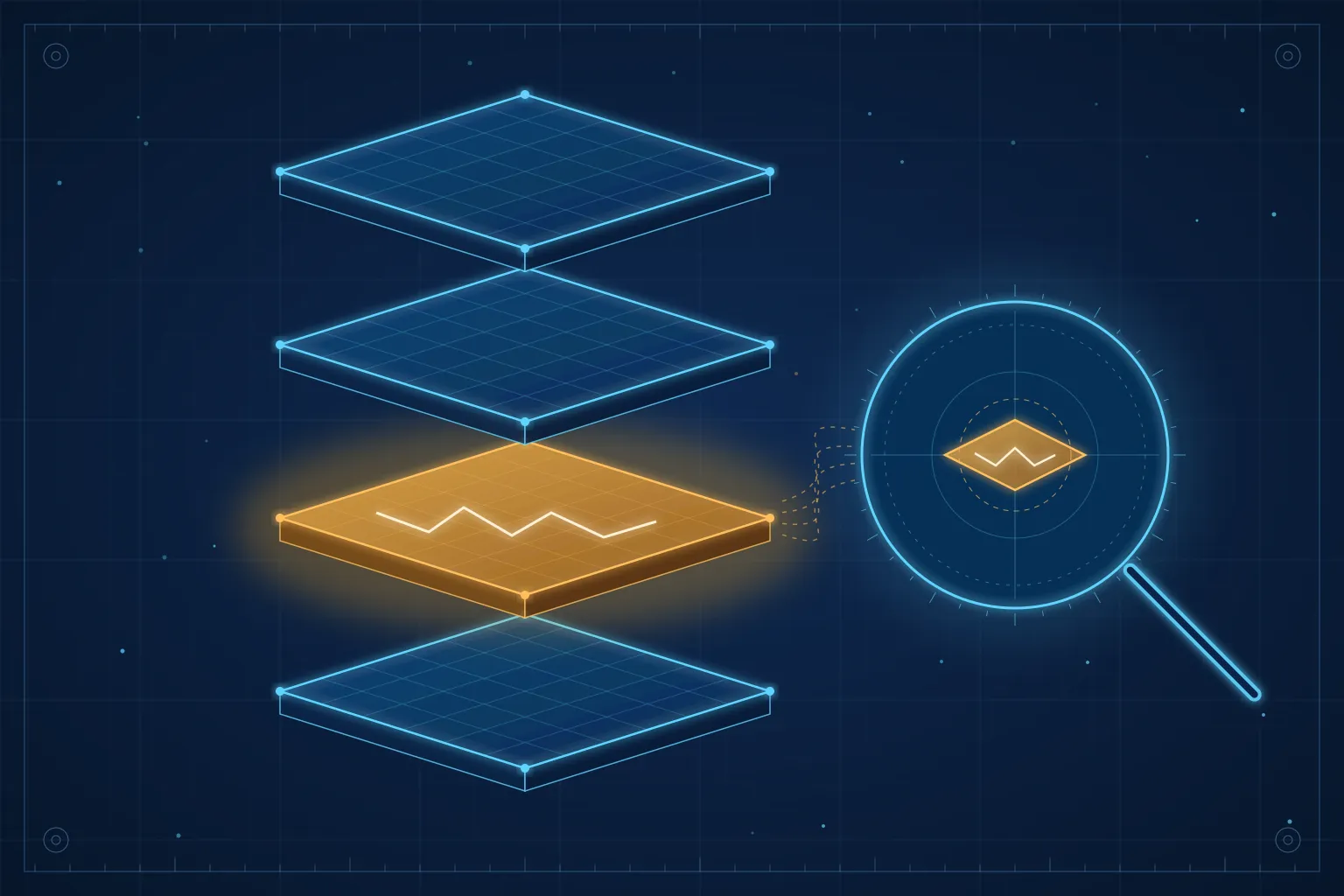
Every one of those steps is about the code I'm about to write. That's the point, and they're excellent at it. But none of them step back and ask the macro question: is the ground under this project still solid? Code review looks at the diff. It doesn't look at the PHP version in your Dockerfile, the Postgres version in your compose file, or the framework that quietly went end-of-life eight months ago.
So I wrote a skill for it. I call it stack-health.
Why It Goes Before Grill With Docs
I went back and forth on this one. After grilling felt natural at first—you know what you're building, so you know what to check. But grilling is where decisions get locked in. If I discover after the session that the runtime we just designed around has a critical CVE or goes EOL next month, I'm reopening decisions I just settled. That's the expensive direction.
Run it first, and the findings walk into the grilling session as constraints: "We're on PHP 8.2, which goes end-of-life on December 31. Does this feature change that plan, or does that plan change this feature?" That's a much better conversation to have before you've written an ADR than after.
Grilling decides what you'll build. Stack health tells you whether the thing you're building on can hold the weight.
Where It Really Earns Its Keep: Projects That Already Exist
On a greenfield project, you pick current versions on day one and this skill mostly tells you "all clear." Fine. Boring is good.
The real value is on existing projects—especially ones with some years on them.
You just joined a team with a lot of legacy
Picture it: new contract, new codebase, and the first ticket is a feature sitting on top of code nobody has touched since 2021. Before you start piling new work onto old foundations, you want to know what you're standing on. Is the runtime supported? Is the framework still getting security releases? Is there a package in the lockfile that's on CISA's list of vulnerabilities being actively exploited in the wild?
You can figure all of that out by hand. It just takes a day you don't have in
your first week, and you'll probably skip the runtime because npm audit came
back clean and you felt good about yourself. (A spotless lockfile and a
three-year-old base image can live very happily together in the same repo.)
Security is already a big concern on the team
Some teams have been burned before, or they're in a regulated space, or leadership just watched PHP2Shell roll through the news and is asking pointed questions. In that world, a regular, dated read on the stack's health isn't paranoia—it's input for prioritization. If something critical shows up, the roadmap might need to change, and the team needs to hear that early.
Raising concerns without being "the new person who hates our code"
This is the part I care about most as a leader. When you're new, your credibility is thin. Walking into standup and saying "I have a bad feeling about this stack" goes nowhere. Walking in with a dated report that says this component, this version, this advisory, this is the fixed version, and this is whether we're actually exposed—that's a conversation the team can act on.
The skill is deliberately built to produce that artifact, and deliberately built not to go rogue. It doesn't upgrade anything on its own. It hands you evidence, and the decisions stay with the people who own them.
What the Skill Actually Does
It runs in five steps:
- Inventory - list every runtime, framework, database, base image, and package with exact versions. It reads lockfiles, not manifests, because the lockfile is what actually ships.
- Run the deterministic tools first -
npm audit,composer audit,pip-audit,osv-scanner, whatever applies. I don't want a language model remembering CVEs; I want it reading tool output. - Search for what the tools miss - dependency audits mostly cover packages, not your runtime, database, or web server. PHP2Shell was a runtime bug. So it searches vendor advisories, the CISA Known Exploited Vulnerabilities catalog, and endoflife.date for the exact versions in use.
- Triage - a CVE isn't a finding until it applies to your project. For each one: Are we exposed? Is it being exploited? Is there a fix, and is it a patch bump or a breaking upgrade?
- Verdict - write a dated
STACK-HEALTH.mdand sort everything into three buckets.
Those buckets are the whole point:
- Clear - one line, move on. No padding.
- Patch now - exposed and fixable. Becomes a ticket that goes ahead of feature work.
- Strategic risk - no simple patch. An EOL runtime, an abandoned framework, a breaking major upgrade. This one goes into the grilling session as an open question, and probably to the wider team as a reprioritization conversation.
It also reads your existing ADRs first, so if the team already accepted a risk on purpose, it doesn't re-raise it every week like a smoke detector with a dying battery.
Run It on a Schedule, Too
Vulnerabilities don't wait for you to start a feature. If I'd only run this at the top of the workflow and I wasn't mid-feature the week PHP2Shell dropped, I'd have missed it. So it should also run weekly as a scheduled task. The workflow placement catches risk before you design; the schedule is the actual safety net.
The Honest Limits
- It's an agent with web search, not a security team. It can miss things, and it can misjudge exposure. That's why the report has a "Not checked" section—it's required to say what it couldn't verify instead of guessing.
- It doesn't replace Dependabot, SCA tooling, or a pen test. It sits above those and asks the macro question they don't.
- The triage is only as good as its view of production. "Is the SOAP extension enabled in prod?" is sometimes a question only a human with access can answer. The skill is told that "couldn't determine" is a valid answer and a guess is not.
Think of it as a conversation starter with receipts.
The Skill
Here's the full SKILL.md. Drop it into your skills folder (for example,
.claude/skills/stack-health/SKILL.md) next to Matt's, and invoke it before
/grill-with-docs. It follows the same conventions—the agent finds the facts,
you make the decisions.
---
name: stack-health
description:
  Audit the project's tech stack for known vulnerabilities, end-of-life
  versions, and stability risks. Use before grill-with-docs, on a schedule, or
  when the user asks whether the stack is safe or current.
---

# Stack Health

Take the macro view: is the ground this project stands on still solid? This is
not a code review. Ignore the project's own code quality and look only at what
it depends on — runtimes, frameworks, databases, base images, and packages.

Run this **before** `grill-with-docs`, so findings enter the grilling as
constraints rather than reopening settled decisions. Also run it on a schedule:
vulnerabilities do not wait for feature work.

Finding _facts_ is your job, never the user's. The _decisions_ — patch, pin,
migrate, accept the risk — are the user's.

## 1. Inventory

List every component with its **exact** version. Read, don't guess:

- **Runtimes**: `.nvmrc`, `.tool-versions`, `composer.json` (`php`),
  `package.json` (`engines`), `pyproject.toml`, `go.mod`, Dockerfile `FROM`
  lines, CI config
- **Packages**: lockfiles, not manifests — the lockfile is what actually ships
- **Infrastructure**: databases, caches, queues, web servers, base images
  (`docker-compose.yml`, IaC, deploy config)

If a `CONTEXT-MAP.md` or `GLOSSARY-MAP.md` exists, the repo has multiple
contexts: inventory each one.

Read `docs/adr/` first. An ADR may already record an accepted risk or a pinned
version — don't re-raise what was deliberately decided unless something has
changed since.

## 2. Run the deterministic tools

Never answer a package-CVE question from memory. Run whichever apply and capture
the output:

- `npm audit` / `pnpm audit` / `yarn npm audit`
- `composer audit`
- `pip-audit`
- `cargo audit`
- `govulncheck ./...`
- `osv-scanner` (covers most lockfiles; prefer it when available)

If a tool is missing, say so in the report rather than silently skipping that
ecosystem.

## 3. Search for what the tools miss

Dependency audits cover packages. They mostly do **not** cover the runtime, the
database, or the web server — which is where the biggest incidents land. Your
training data is stale by definition here, so search the web for every runtime
and infrastructure component:

- **Vendor security advisories** for the exact version in use
- **CISA Known Exploited Vulnerabilities** catalog — is anything in the
  inventory on it?
- **End-of-life dates** (endoflife.date) — flag anything EOL or within six
  months of it
- **Recent news** — search `<component> vulnerability` for the current month
- **Supply-chain signals** for key packages: compromised releases, maintainer
  takeovers, abandonment, sudden licence changes

Record the source and date for every finding.

## 4. Triage

A CVE is not a finding until it applies to _this_ project. For each one, answer:

1. **Exposed?** Is the affected component, extension, or code path actually used
   and reachable here? Check the code and config.
2. **Exploited?** Is there a public exploit or in-the-wild use?
3. **Fixable?** Is there a patched version, and is the upgrade a patch bump or a
   breaking change?

Be honest about uncertainty. "Could not determine whether the SOAP extension is
enabled in production" is a valid answer; a guess is not.

## 5. Verdict

Write `STACK-HEALTH.md` at the repo root, replacing the previous one. Use the
project's vocabulary from `CONTEXT.md` or `GLOSSARY.md` when naming systems.

```md
# Stack Health — <YYYY-MM-DD>

**Verdict: CLEAR | PATCH NOW | STRATEGIC RISK**

## Patch now

- <component> <current> → <fixed>: <one-line why>, <source>

## Strategic risks

- <component>: <risk, deadline if any>, <source>

## Checked and clear

- <component> <version>

## Not checked

- <what and why>
```

Then sort every finding into one of three outcomes:

- **Clear** — say so in one line and stop. Don't pad.
- **Patch now** — exposed and fixable. Propose a ticket that goes ahead of
  feature work. Do not upgrade anything yourself unless the user says to.
- **Strategic risk** — no simple patch: an EOL runtime, an abandoned framework,
  a breaking major upgrade. Carry it into `grill-with-docs` as an open question.
  It is an ADR candidate, by the usual three tests: hard to reverse, surprising
  without context, a real trade-off.

Finish by giving the user the verdict and the top findings in a few lines. The
file holds the detail.
If you're stepping into a codebase with some history this month—and with PHP2Shell still fresh and PHP 8.2 about to go EOL, a lot of you are—run it before you write a line. Worst case, it tells you everything's fine and you lose five minutes. Best case, you find the rotten floorboard before you put the piano on it.
Cheers!